

In aerospace systems, conductor reliability matters more than conductivity
In static applications, conductivity is often the primary selection criterion.
In aerospace environments, however, conductor failures are far more likely to result from structural fatigue, instability, or early degradation than from insufficient electrical performance.
Repeated motion, vibration, and thermal cycling place continuous stress on wiring systems.
As a result, long-term reliability becomes the defining requirement for aerospace conductors.
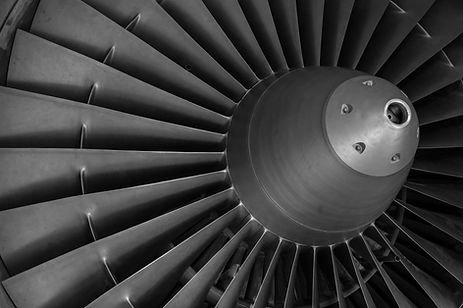
Why Aerospace Systems Require Flexible Conductors Instead of Conventional Wires
In static equipment, conductors are often only required to meet basic electrical specifications, as mechanical stress and long-term motion are limited.
Why Aerospace Systems Require Flexible Conductors Instead of Traditional Wire
|Real-World Challenges in Dynamic Aerospace Environments
1
Metal Fatigue Caused by Repeated Bending and Micro-Vibration
In aerospace systems, wiring harnesses often move with mechanical structures or experience continuous vibration during operation, accelerating fatigue accumulation over time.
2
Stress Concentration at Bends and Fixed Attachment Points
In real-world aerospace systems, failures most commonly occur at harness bends, fixed routing points, or connector interfaces where mechanical stress is concentrated.
3
Early Structural Failure after Extended Operation
Even when a wire performs normally during initial testing, structural degradation can still occur over long-term operation. These failures often emerge during later qualification stages or after deployment, where cumulative stress and fatigue become critical factors.
The design objective of flexible conductors is not short-term compliance, but the ability to maintain predictable performance and structural reliability throughout extended operating lifetimes under dynamic conditions.
4
Electrical and EMI Performance Instability under Dynamic Conditions
In dynamic environments, bending and vibration can cause variations in conductor and shielding structures, leading to instability in electrical parameters and EMI performance.
In aerospace systems, this directly affects signal reliability and overall system integrity. A structure-driven flexible conductor design helps maintain consistent electrical behavior and stable shielding effectiveness under dynamic conditions, reducing performance fluctuation over long-term operation.
5
Space and Weight Optimizatio
-
Supporting efficient system integration
-
In aerospace systems where space and weight are tightly constrained, flexible conductors enable more efficient cable routing and reduced cable management complexity.
-
This contributes to cleaner system integration without compromising reliability.
6
Long-Term Durability for Qualification and Validation
-
Built to support extended testing and operational lifetimes
-
Flexible conductors are engineered to withstand repeated bending, vibration, and environmental stress throughout qualification testing and long-term operation.
-
This durability reduces the risk of early failures during validation and deployment.
|Precisely Controlled Outer Diameter and Electrical Resistance as System-Level Design Parameters
In most conductor supply chains, outer diameter and electrical resistance are often treated as outcomes of manufacturing processes rather than parameters that can be deliberately designed.
At MAEDEN, conductor outer diameter and resistance are defined as system-level design variables. They can be specified and controlled based on aerospace system architecture, space constraints, and electrical performance requirements.
This level of controllability allows engineering teams to anticipate conductor behavior during the design and validation stages, reducing the risk of late-stage modifications, rework, or test failures caused by mismatched wire characteristics.
Structural Design and Reliability of Flexible Conductors in Aerospace Applications
Compared to traditional rigid wires, the role of flexible conductors in aerospace applications extends beyond ease of bending. Their primary value lies in reducing failure risk and improving system reliability under long-term operation, repeated motion, and continuous vibration.
In aerospace systems, flexible conductors are engineered to maintain structural integrity and electrical stability under dynamic conditions. The following sections outline the key structural advantages that make flexible conductors essential in aerospace environments.
Enhanced Flex Life
Flexible wire and cable are specifically designed to have a longer flex life. They can withstand thousands of bending cycles without degradation, ensuring reliable performance over extended periods.
Reduced Weight
Aerospace wire and cable are subject to strict weight restrictions. Flexible wire and cable solutions are typically lighter than rigid counterparts, contributing to overall weight reduction and fuel efficiency.
Improved Maneuverability
Flexibility allows wires and cables to be easily routed around corners, through tight spaces, and across moving parts. This improves the maneuverability and installation process, saving time and effort.
Resistance to Fatigue
Aerospace environments subject wire and cable to constant stress, which can lead to fatigue failure over time. Flexible wire and cable are designed to resist such fatigue, ensuring long-term reliability and performance.
Tensile Strength
The constant movement, vibration, and mechanical stress in aerospace applications can cause wires to break if they lack flexibility. Flexible wire and tinsel wire solutions offer superior resistance to breaking and damage.
Elongation Capacity
In long-term aerospace operation, constant movement, vibration, and mechanical loading can lead to fatigue accumulation. Adequate elongation capacity allows the conductor structure to accommodate controlled deformation, reducing stress concentration and lowering the risk of premature fatigue failure.
Material and Insulation Selection for Aerospace Wiring Reliability
Material and insulation choices directly influence long-term durability, EMI performance, and qualification outcomes in aerospace systems.
Different materials exhibit distinct behavior in terms of thermal resistance, dielectric stability, abrasion resistance, and environmental tolerance.
Material selection must therefore align with conductor structure and actual operating conditions.
Polyethylene (PE)
Suitable for low-temperature or relatively stable environments where lightweight construction and consistent dielectric performance are required.
Teflon (PTFE)
Provides excellent high-temperature stability and low dielectric loss, making it suitable for signal-critical aerospace applications.
FEP / ETFE
Balances thermal resistance, mechanical durability, and flexibility, commonly used in dynamic routing and dense wiring layouts.
Polyurethane (PU)
Provides superior abrasion resistance and mechanical protection in vibration-prone or contact-heavy harness zones.
Applicable Aerospace and Space Systems
In aerospace and other high-reliability industries, conductor selection is never driven by upfront cost alone. The real cost comes from qualification failure, rework, and long-term reliability risk. This is why structure-driven conductor design matters.
MAEDEN’s flexible conductors are engineered for high-dynamic, high-reliability aerospace environments.
One of the primary concerns when it comes to aerospace wire and cable customization is their electrical performance. These components are responsible for transmitting crucial signals and power within the aircraft's complex systems. During the testing phase, the electrical characteristics of the wire and cable solutions are thoroughly assessed. This includes analyzing their conductivity, resistance, and overall signal integrity. By ensuring the wires and cables meet the required electrical standards, the risk of electrical malfunctions or signal disruptions is significantly reduced.
Dynamic Pressure Test Comparison: Conventional Wire vs. MAEDEN C7 Series
This figure illustrates the real-time pressure response distribution generated by different conductor structures under dynamic test conditions.
The red data points represent conventional wire constructions. During testing, their pressure values show a wide dispersion and significant fluctuation, indicating unstable structural behavior when subjected to dynamic stress and vibration.
In contrast, the MAEDEN C7 Series (blue) demonstrates a highly concentrated pressure response with a noticeably narrower distribution under the same test conditions. This indicates that the conductor structure is able to effectively absorb dynamic stress, reducing instantaneous spikes and irregular feedback.
Such differences suggest that in high-vibration or rapidly changing dynamic environments, MAEDEN’s conductor architecture delivers more predictable mechanical behavior. This structural stability helps reduce system-level interference and lowers the risk of instability-driven disturbances or premature failures over long-term operation.

STAR Student Rocket Team Collaboration
The STAR student rocket team showcased the latest research and development achievements in student-built rockets in Taiwan. MAEDEN is honored to participate as a research and development support partner, providing high-flexibility conductor solutions used in the rocket’s pressure sensing and data acquisition (DAQ) systems.
These flexible conductors are designed to support stable signal transmission under dynamic launch and flight conditions, contributing to reliable pressure measurement and data integrity throughout testing and operation.
Why Choose Maeden as Your Aerospace Wire and Cable Material Manufacturer?
When it comes to aerospace wire and cable customization, partnering with an experienced and reliable manufacturer is crucial. Here's why Maeden is the ideal choice:
|MAEDEN’s Structure-Driven Approach to Aerospace Conductor Design
We treat conductor outer diameter and electrical resistance as system-level design variables rather than fixed manufacturing outcomes.
By defining these parameters early in the development stage—starting from conductor structure, material configuration, and process conditions—we enable precise control throughout production and supply chain execution. Manufacturing processes are managed in accordance with ISO 14001 environmental management standards and IATF 16949 quality systems for high-reliability supply chains, while complying with RoHS and GRS 4.0 (Global Recycled Standard) requirements.
These integrated quality and material control mechanisms ensure that MAEDEN conductors deliver stable structural performance, durability, and long-term reliability in demanding aerospace applications.
Why does this structural approach matter in aerospace applications
-
Space allocation is no longer constrained by the wire itself
Conductor outer diameter can be designed according to actual harness routing, bend radius requirements, and module density, rather than being locked into predefined wire gauges.
-
Electrical performance can be predicted at the design stage
Controllable resistance allows power loss, signal stability, and thermal behavior to be evaluated early during system design and validation, instead of being discovered late in testing.
-
Structural reliability and electrical performance are no longer a trade-off
Traditional conductors often force a compromise between reduced size and durability. A structure-driven design approach enables both mechanical endurance and electrical stability to be optimized simultaneously.
-
Reduced risk of repeated redesign and validation failure
When critical parameters are designed and reproducible, system projects avoid late-stage rework caused by conductor mismatch, lowering the risk of qualification delays and validation failure.
|This is not customization for its own sake. It is a redefinition of the conductor’s role in aerospace system.
At MAEDEN, conductors are not treated as passive components, but as structural elements that directly influence system reliability.
With over 40 years of conductor manufacturing experience, MAEDEN understands the qualification, validation, and long-term reliability requirements of aerospace systems.
With over 40 years of experience in conductor manufacturing and structural design, MAEDEN’s expertise goes beyond production history. It reflects a deep, long-term understanding of failure mechanisms in high-reliability applications.
In aerospace environments, challenges are rarely static. Conductors are continuously exposed to long operating cycles, repeated bending, vibration, and dynamic load variation. Over time, these conditions can lead to fatigue accumulation and structural degradation.
This is why MAEDEN approaches aerospace conductor design from a reliability-first perspective, focusing on how structure behaves under real operating conditions rather than relying solely on nominal specifications.